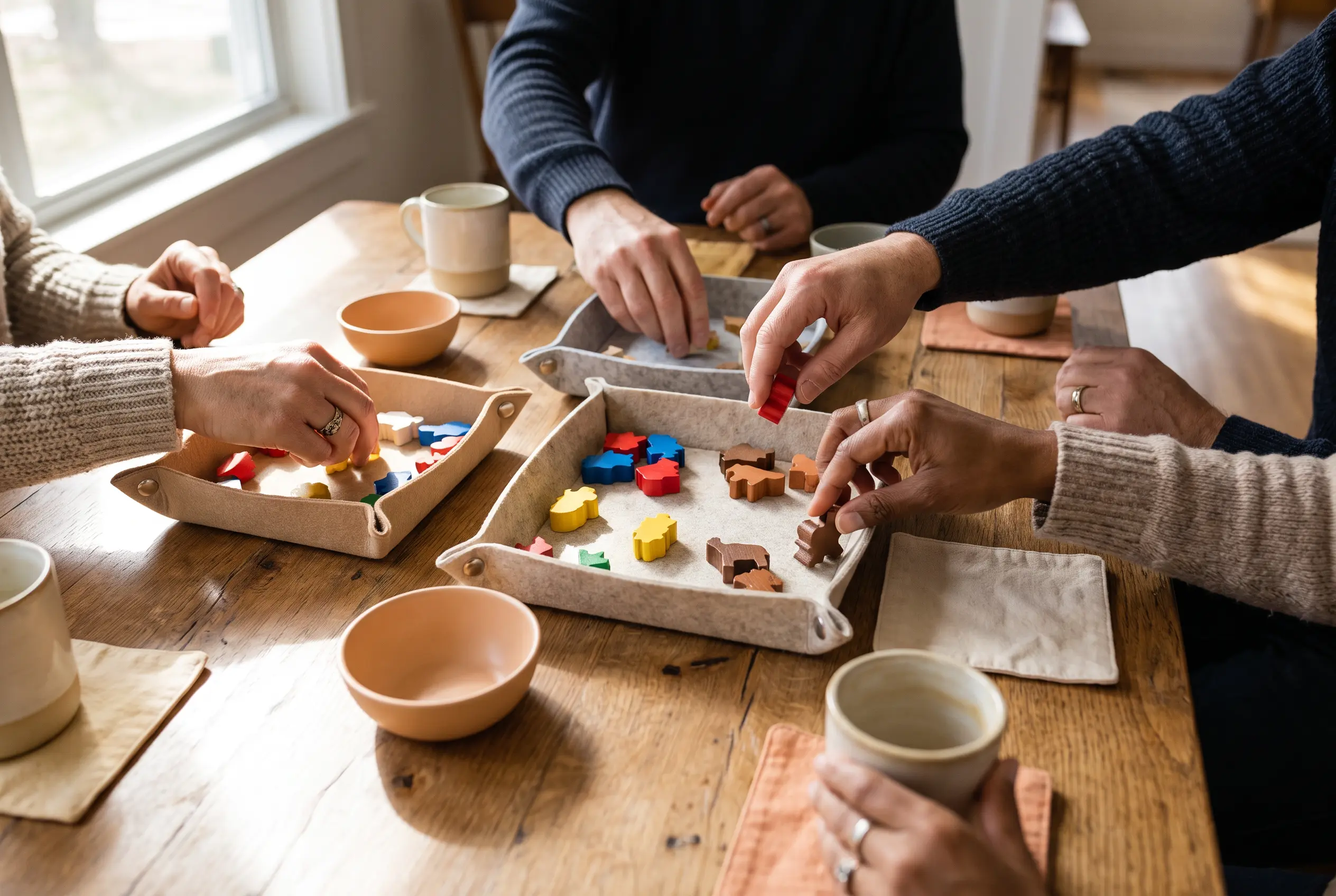
Sorting
Loose pieces become legible when grouped by shape or role.
Tabletop games · information & hosting
Meporavi Table Room is a field guide for the generous details around a tabletop game: a clear place to sit, a shared pace, and a gentle way to put the pieces away.
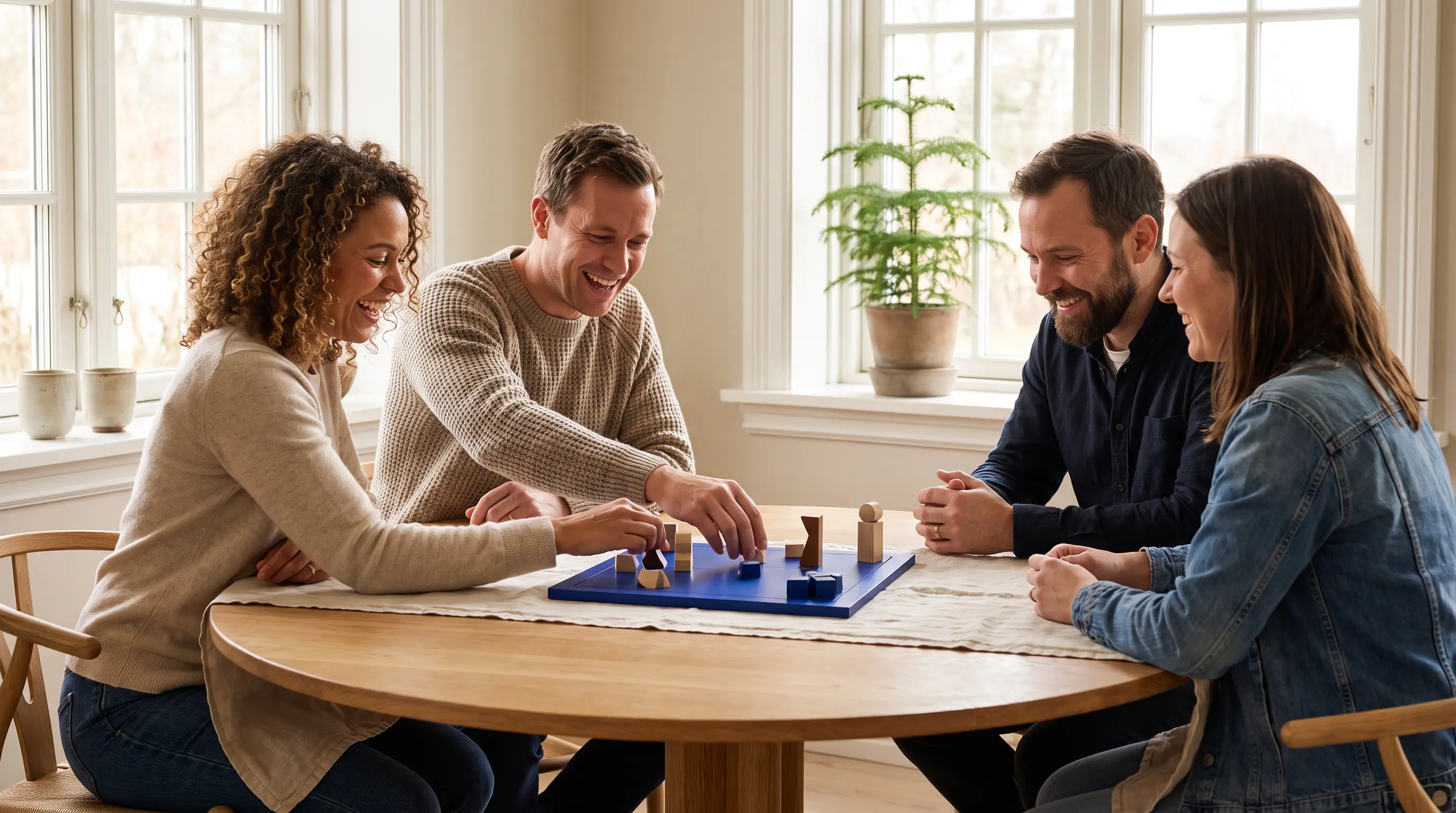
01 · the table map
Think of the table as a map with a few memorable regions. Give components a home, keep refreshments at the edge, and leave an open lane for the rulebook or a shared reference card.
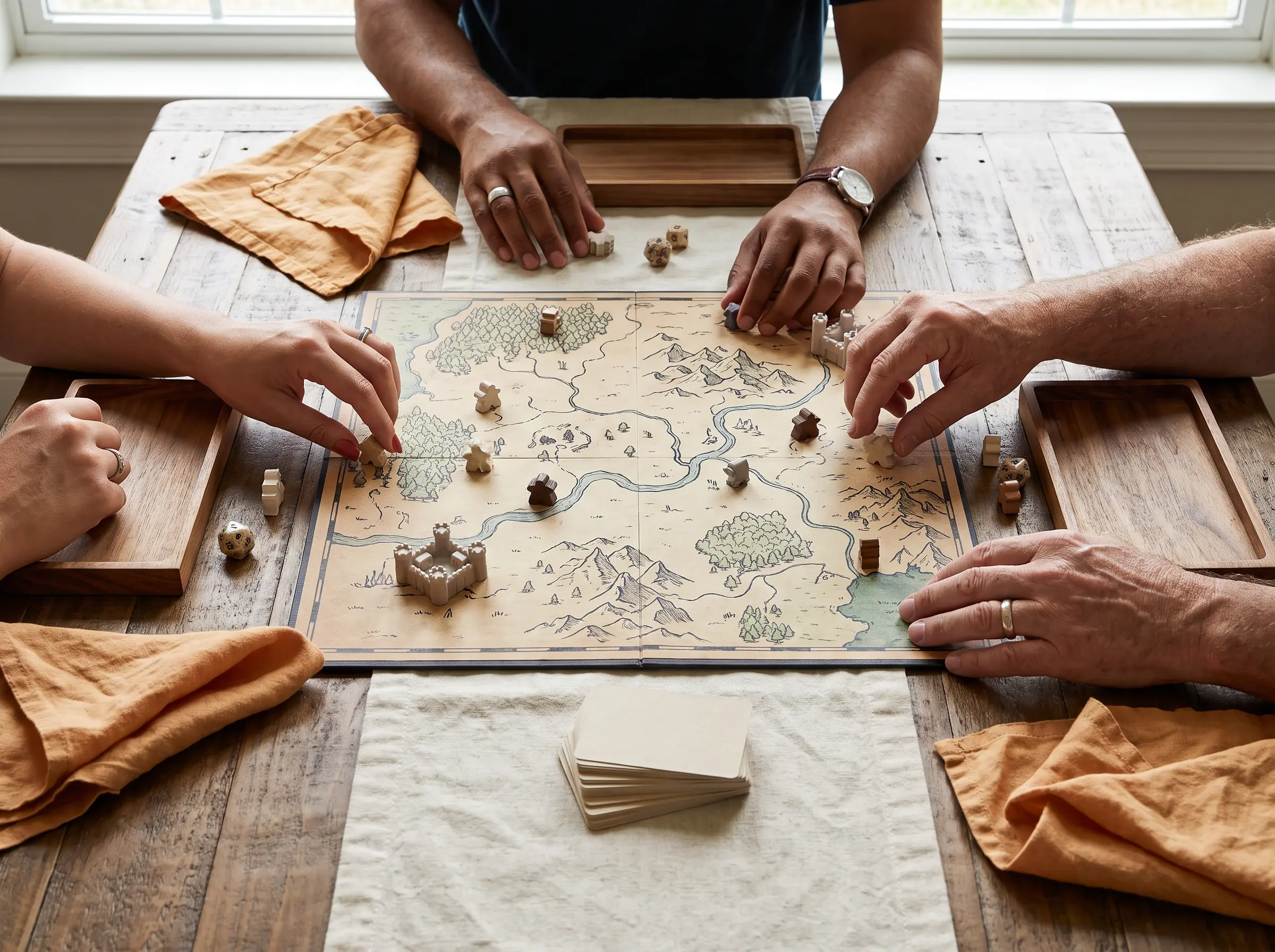
Shared centre: board, common supply, turn marker.
Keep each player’s tools within easy reach.
Choose one obvious marker for the active turn.
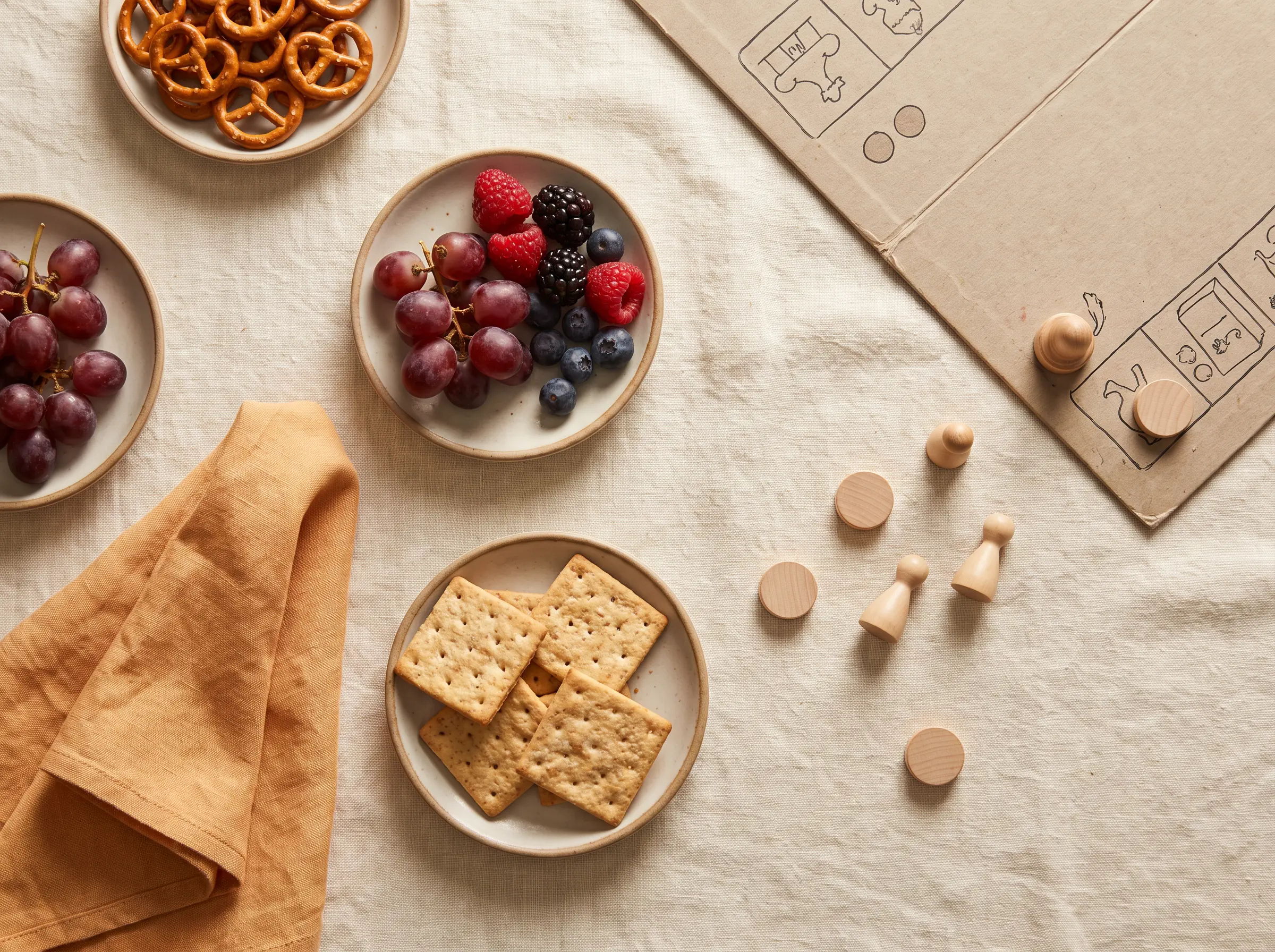
Park cups and snacks away from moving parts.
02 · component trays
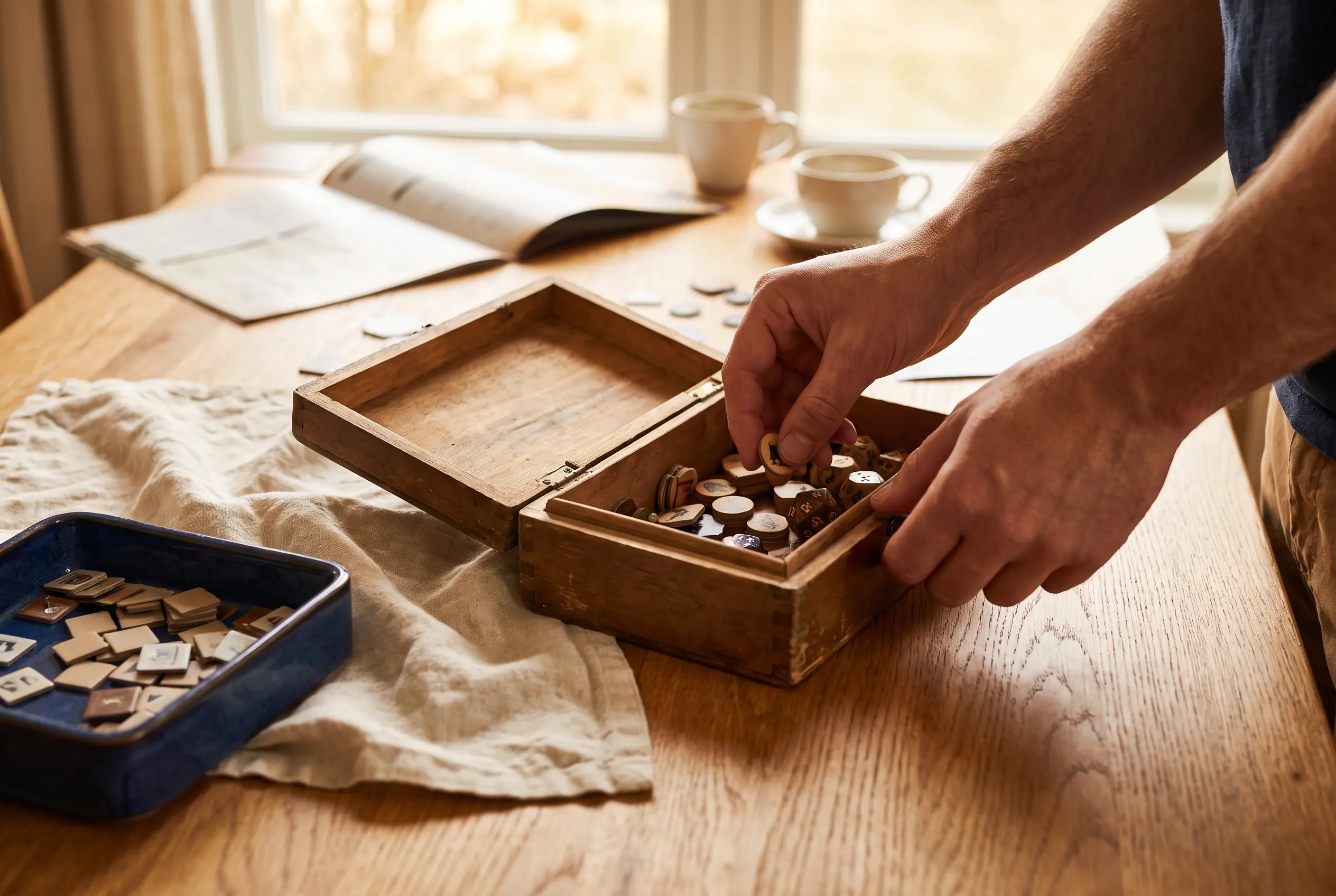
Loose pieces become legible when grouped by shape or role.
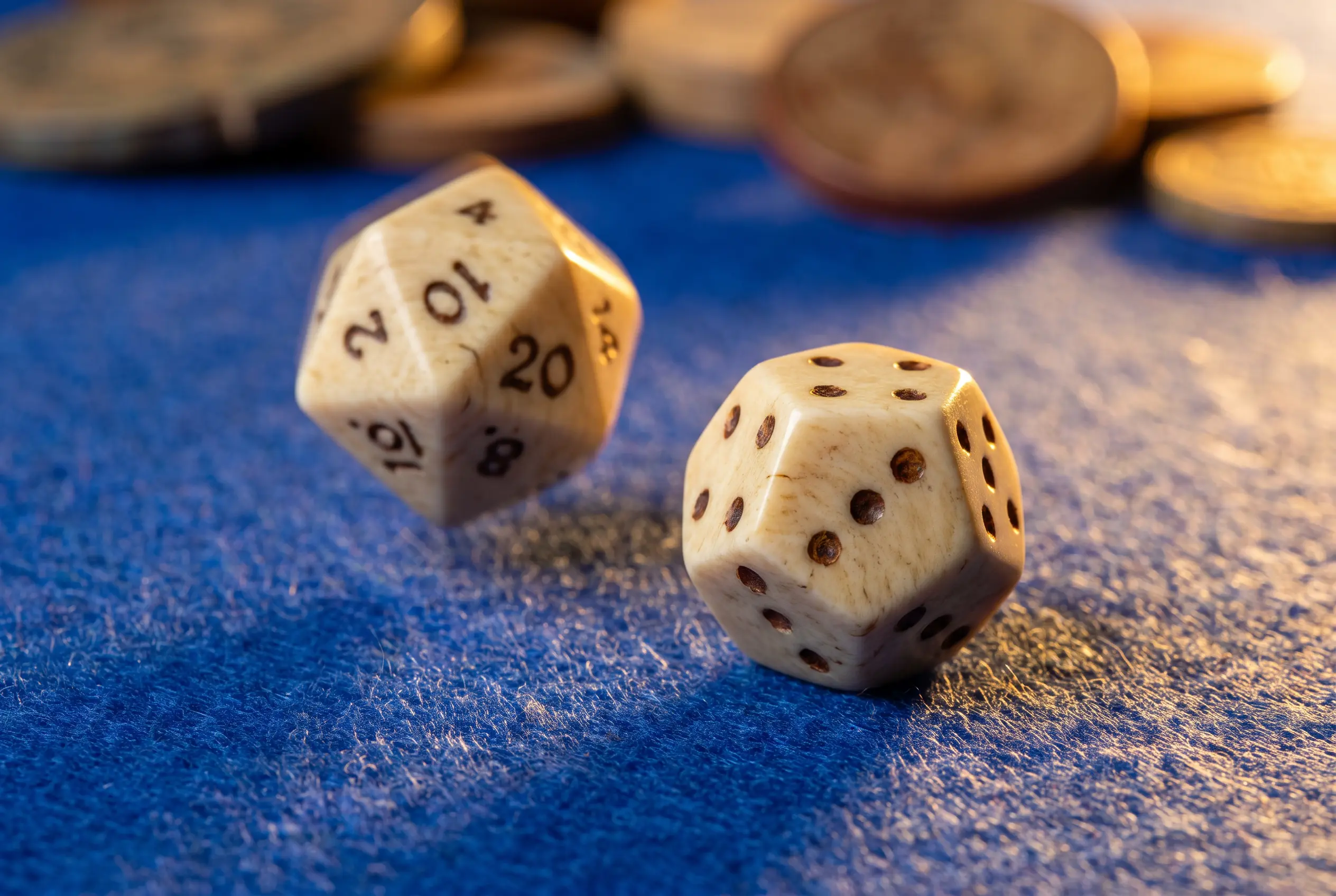
A small tray makes every roll easier to find.
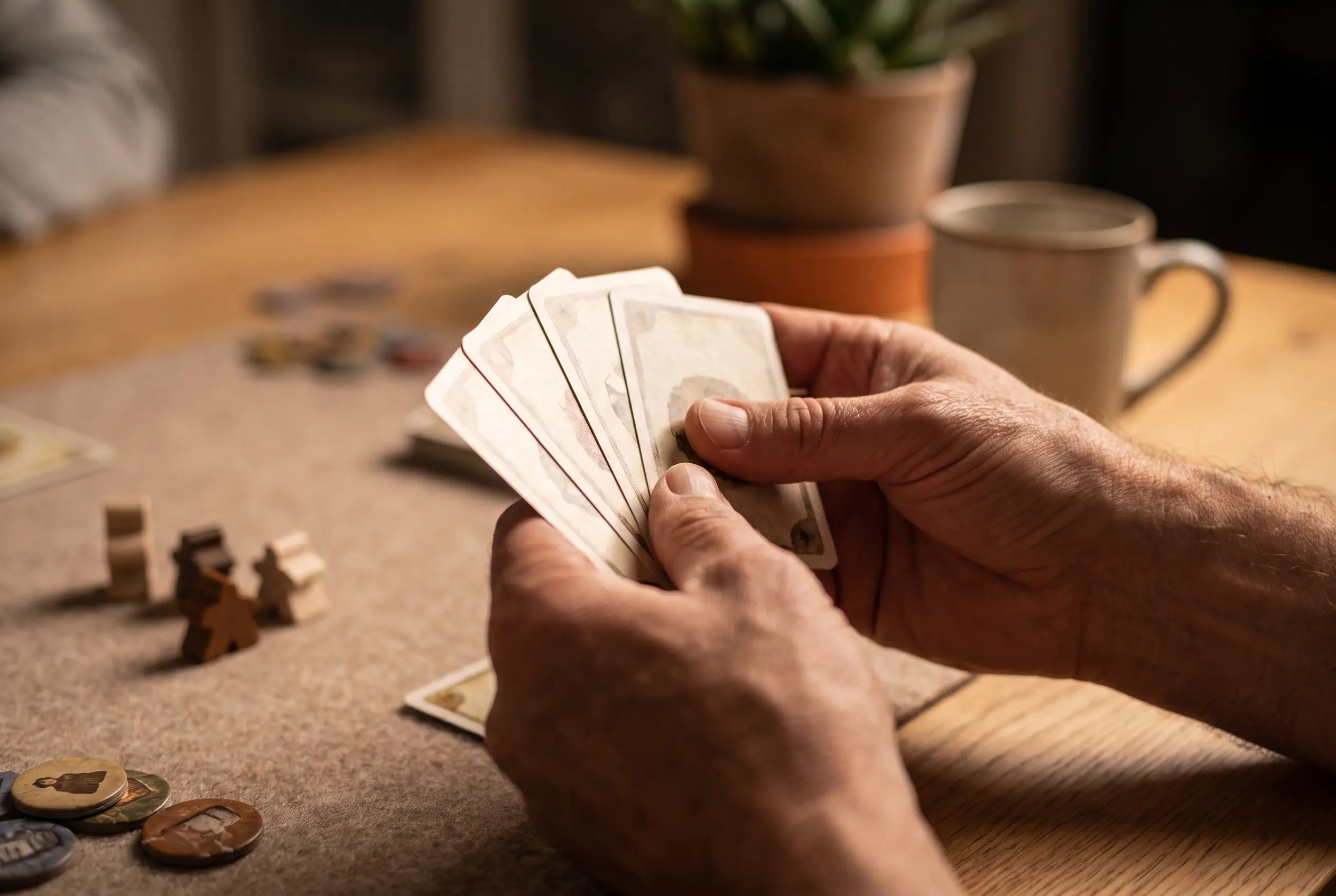
Reserve an easy-to-reach place for decks and discards.
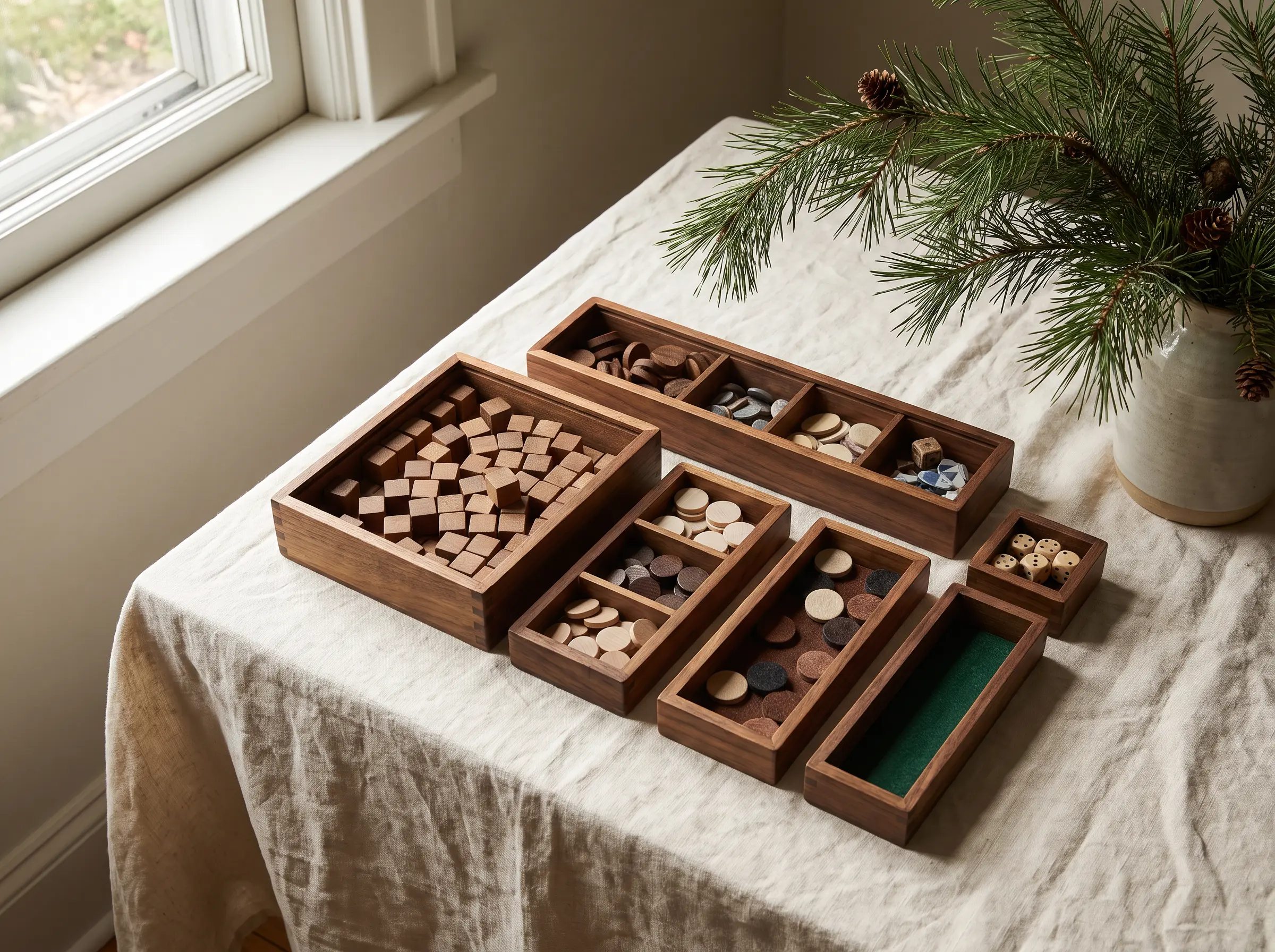
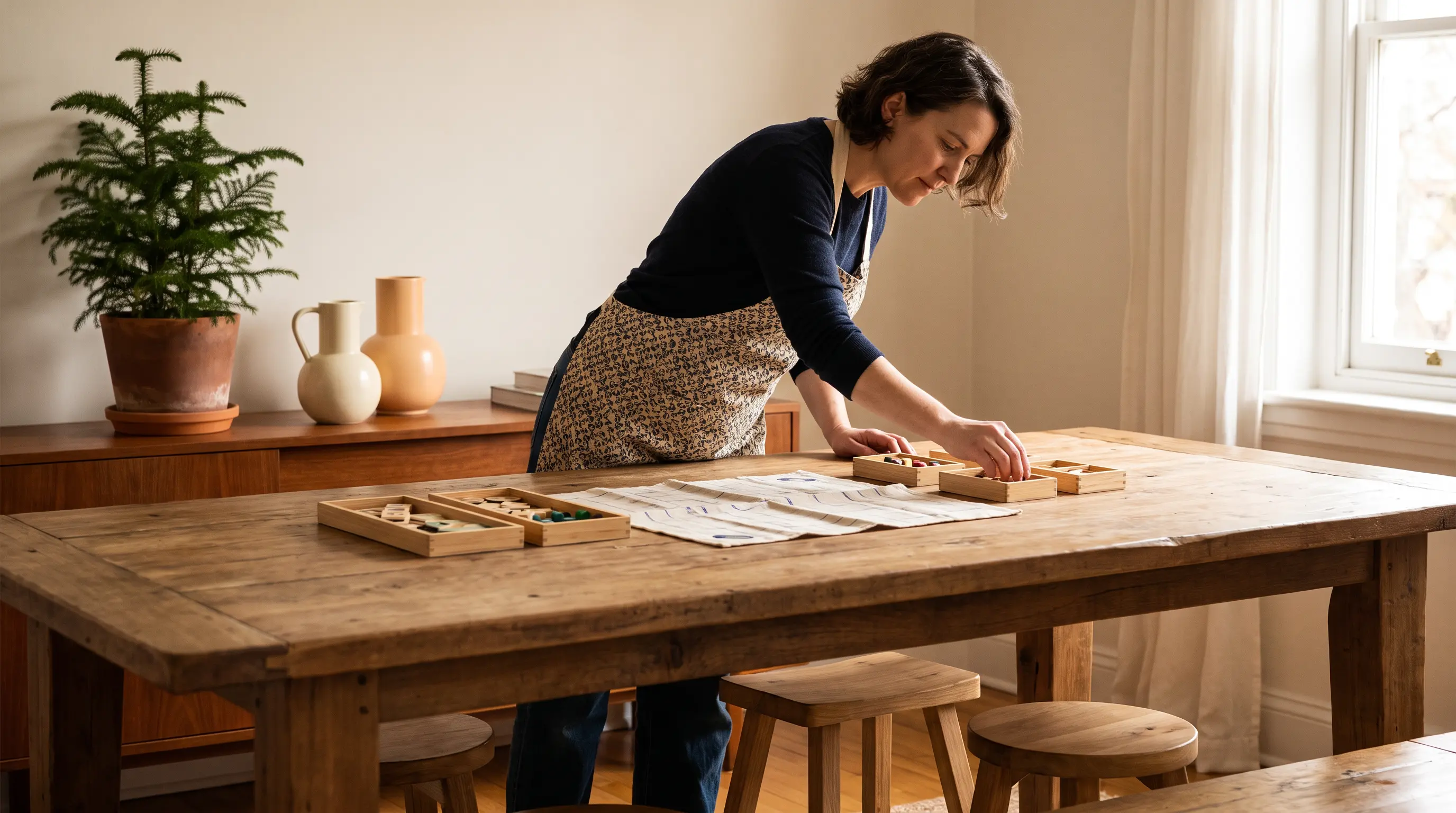
Use the same trays during play and at the reset.
03 · host prelude
A short prelude gives everyone a shared starting point: who is learning, what stays visible, and where questions can land without stopping the room.
Choose a format04 · room formats
Use these formats as conversation starters, not a prescription. The right shape is the one that lets the group remain present.
For a smaller group settling into one shared puzzle. Put the reference materials in the centre, name a point for breaks, and leave time after the first round for a clarification without hurry.
Helpful ingredients
For people arriving at different moments. Use games with a clear entry point, label the component zones aloud, and keep a simple explanation available for the next person who sits down.
For an energetic round with an obvious finish. Keep setup light, announce what ends the game before play begins, and protect a little time to reset together.
05 · table checklist
This list is intentionally modest. Tick what helps your particular room and clear it when a new session needs a fresh start.
06 · table signals
One physical signal helps the whole table locate the next choice.
A consistent discard area prevents accidental shuffles back into play.
Agree that anyone can briefly stop to locate a rule together.
Start putting away the first category before the last conversation ends.
07 · field notes
Filter the small notes below to surface an idea for your current room.
Setup
Orient a deck once, then let that edge become a small shared language at the table.
During play
A short recap at a turning point keeps quiet observers connected to the current moment.
Reset
A shared sort is less about speed than giving the group a gentle end to the round.
Setup
An open chair can make the table feel welcoming even when no additional player arrives.
08 · after the teach
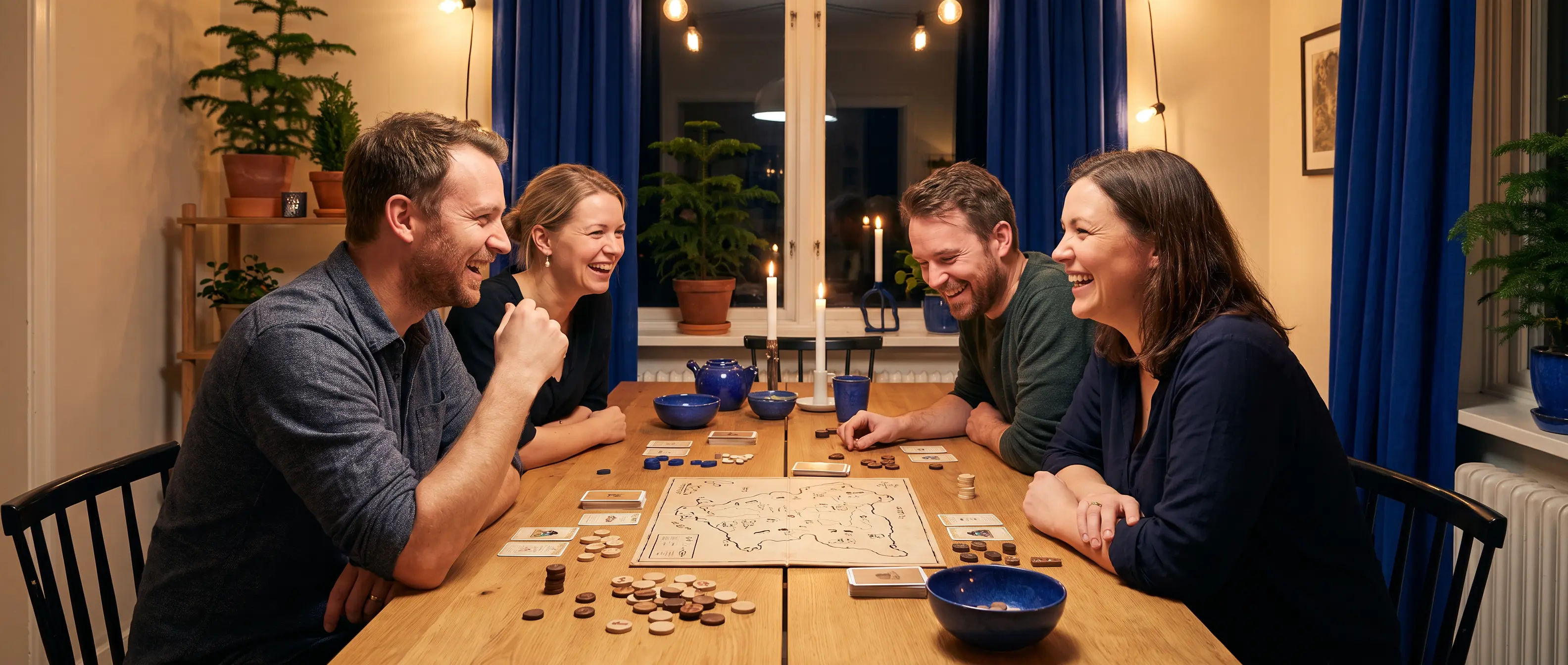
Conversation, a small pause, someone reaching for a piece: a table has its own tempo. Let the game make that tempo visible.
09 · house rules
These are not game rules. They are reusable social handles for a table where people can ask, change their mind, and remain part of the round.
Simple operating note
Clarity first. Curiosity second. Clean-up together.
10 · local table draft
Use this little browser draft to collect a few hosting thoughts. It stays in this browser only and sends nothing anywhere.
Read the privacy note for the plain-language detail.
Prefer email? [email protected]